Plenty of people trade burgers for beans in the hope of a longer life, yet fresh research throws a curveball at that idea.
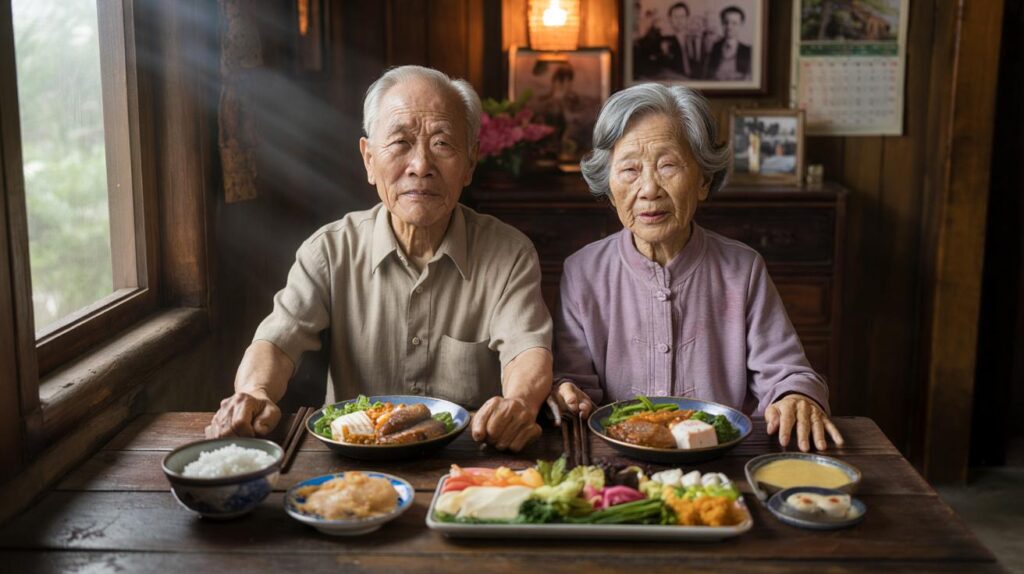
A major study following thousands of very elderly people in China has found that those who still ate meat were more likely to make it to their 100th birthday than those who avoided it altogether – but the story behind that headline is far more nuanced than a simple “meat good, plants bad” narrative.
What the new longevity study actually found
The research drew on data from more than 5,000 Chinese adults aged 80 and above, tracked over two decades through the Chinese Longitudinal Healthy Longevity Survey. Researchers looked at eating patterns, body weight and who eventually reached the milestone age of 100.

On paper, meat eaters were more likely to become centenarians than people following diets that excluded meat. For a country with deep traditions around plant-based cooking, that finding raised eyebrows.

The reduced chance of reaching 100 among non–meat eaters appeared only in very thin older adults, not in those of healthy weight.
That single detail changes the whole interpretation of the results. The data suggest that being underweight in old age, rather than simply avoiding meat, is closely tied to lower odds of extreme longevity.
Your nutritional needs shift dramatically after 80
Most of the glowing research on plant-based diets comes from younger and middle-aged adults. In those groups, vegetarian and largely plant-based eating patterns are linked with lower risks of heart disease, stroke, type 2 diabetes and obesity.
Once people cross into their 70s, 80s and beyond, the priorities change. Bodies burn less energy, muscle mass drops, bones thin out and appetite often shrinks.
In very old age, the challenge is less about avoiding future illness and more about hanging on to muscle, strength and enough body weight to stay resilient.
Why frailty matters more than cholesterol at 90
When an 85-year-old loses a few kilos, that weight is often precious muscle and tissue, not just spare fat. That loss makes falls more likely, infections harder to shake and hospital stays riskier.
The study hints that non-meat eaters who were already underweight struggled to get enough protein and key nutrients to maintain muscle and bone. That doesn’t prove meat itself is magic; it points to the dangers of undernutrition in late life.
- Lower appetite with age → fewer calories and less protein
- Less chewing strength → people choose softer, often less nutritious foods
- Chronic illness and medications → can further blunt hunger and nutrient absorption
All of this means that dietary advice that works brilliantly at 45 may be a poor fit at 85.
The “obesity paradox” and a bit of extra padding
The results line up with a controversial idea in ageing research known as the “obesity paradox”. Among older adults, those who carry a little extra weight often fare better when they get ill than those who are very slim.
Excess body fat is a clear risk factor earlier in life, driving heart disease and metabolic illness. In the ninth or tenth decade, though, a slightly higher body mass can act as a reserve during infections or hospital stays, when eating becomes difficult.
In later life, being too light can be more dangerous than being slightly heavy, especially when combined with low protein intake.
The Chinese study underlines that point: underweight, meat-avoiding elders did worst; those with more typical body weight were not disadvantaged by skipping meat.
Where fish, eggs and dairy come into the picture
The researchers did not see the same longevity gap in older adults who ate fish, dairy or eggs while skipping meat. These individuals had roughly similar odds of hitting 100 as meat eaters.
That suggests that small amounts of animal-based foods may plug nutritional gaps that become harder to fill with plants alone in extreme old age.

| Food group | Key nutrients for older adults |
|---|---|
| Meat | High-quality protein, iron, vitamin B12, zinc |
| Fish | Protein, omega‑3 fats, vitamin D, iodine |
| Dairy | Calcium, protein, vitamin B12, often vitamin D |
| Eggs | Protein, vitamin B12, choline, vitamin D |
These foods are dense in nutrients, relatively easy to chew and digest, and can fit easily into small meals or snacks – useful traits when older adults are eating less overall.
Why this doesn’t “disprove” plant-based diets
Nothing in the data contradicts decades of evidence that plant-forward eating brings strong health advantages earlier in life. High-fibre diets rich in vegetables, fruit, whole grains, beans and nuts are still associated with lower blood pressure, improved cholesterol profiles and reduced inflammation.
The twist is that a strictly vegan or heavily plant-based diet in someone over 80 must be carefully managed, especially if they are already on the slim side.
Plant-based diets can support healthy ageing, but they need enough calories, protein and micronutrients to prevent frailty rather than weight loss.
What older vegetarians and vegans can do
For those avoiding meat in their later years, the study points toward adjustment rather than abandonment of their principles. Key strategies include:
- Boosting protein with tofu, tempeh, lentils, beans, seitan and soya yoghurt
- Spacing protein across meals, not just at dinner
- Using energy-dense foods like nut butters, olive oil and avocados to prevent unintended weight loss
- Considering fortified foods or supplements for vitamin B12 and vitamin D
- Pairing calcium-rich plant foods (like fortified plant milks and tahini) with vitamin D sources
Those comfortable eating eggs or dairy gain extra flexibility: a daily omelette, yoghurt or cheese can significantly increase protein and calcium without relying on large portions.
Observational study, not a dietary verdict
The research is observational. That means the scientists watched what people ate and what happened over time; they did not ask participants to follow strict meal plans. So the study can highlight associations but cannot prove that giving up meat directly shortens life.
Non-meat eaters in this older generation may also differ in ways the study could not measure fully: income, early-life nutrition, access to healthcare or past illnesses. Some may have cut meat due to poor teeth, swallowing difficulties or existing health problems – all of which can themselves affect survival.
Practical takeaways for different ages
The message is less about choosing a “team” of meat versus no meat, and more about adapting your plate to your age, health and weight.
- In your 30s–50s: Emphasise plants, cut back on processed meats, keep an eye on long-term risk factors like blood pressure and cholesterol.
- In your 60s–70s: Start prioritising protein at each meal, including plant or animal sources, and watch for unintentional weight loss.
- In your 80s and beyond: Focus on maintaining strength, balance and appetite; accept that slightly higher body weight may be protective.
For families caring for older relatives, the findings offer a useful prompt. A grandparent stubbornly pushing peas around the plate but happily finishing a soft-boiled egg or a small piece of fish may be telling you what their body needs more of: concentrated protein and nutrients in modest portions.
Key terms and real-life scenarios
Two concepts are especially helpful when reading about this study.
Frailty: A medical term describing reduced strength, slower walking speed, low activity levels and weight loss. Frail people are more vulnerable to falls, infections and hospital complications. Diet plays a major role in whether someone slips into frailty or maintains independence.
Protein quality: Not all protein sources are equal. Animal foods contain all the essential amino acids in high amounts. Plant sources can provide enough, but usually require mixing several foods and eating larger volumes, which may be tricky for someone with a tiny appetite.
Picture two 88-year-olds. One follows a lean vegan diet, still walks daily, but has recently dropped several kilos and now struggles to finish meals. The other eats mostly vegetables and grains but adds yoghurt at breakfast and fish twice a week, keeping a stable, slightly higher weight. Based on the study’s patterns, the second person may be better protected against the slide into frailty and stands a stronger chance of reaching 100.
 Goodbye kitchen cabinets: the cheaper new trend that won’t warp, swell, or go mouldy over time
The takeaway is not that meat is a magic ticket to triple digits, nor that plants are overrated. The data suggest longevity is less about rigid labels and more about whether an older body receives enough energy, protein and key nutrients to stay upright, strong and resilient through its final decades.