
High-intensity workouts dominate fitness trends, but for many people over 50, they quietly work against progress. Frequent bursts of all-out effort increase fatigue buildup, place extra stress on joints, and overload recovery systems that already slow with age. Instead of speeding up results, this pattern often triggers chronic inflammation and inconsistent training habits, which stall fat loss rather than support it.
Low-impact movement changes the outcome. Steady motion, controlled muscle tension, and full-body involvement allow the body to burn fat without excessive stress hormone spikes. At this stage of life, daily consistency matters more than peak intensity, because recovery capacity—not effort alone—drives long-term results.
The routines below focus on rhythm, posture, and muscular engagement throughout the body. When performed regularly, they outperform occasional HIIT sessions by keeping metabolism active, protecting joints, and maintaining movement quality—the exact mix fat loss requires after 50.

Brisk Walking With Purposeful Arm Drive
Walking by itself can feel too gentle, but adding deliberate arm drive transforms it into a full-body fat-burning routine. Actively swinging the arms increases upper-body activation, naturally raises heart rate, and boosts calorie use without impact. This version relies on posture and coordination, not speed or strain.

Practiced daily, this walking style supports steady fat usage while reinforcing joint-friendly mechanics. Over time, it improves endurance, tightens the waist, and builds the kind of training consistency that high-intensity workouts often disrupt.
How to Do It
- Walk tall with chest open
- Swing arms firmly front to back
- Keep elbows bent near 90 degrees
- Hold a steady, intentional pace
Standing March With Strong Core Brace
Marching restores controlled single-leg loading, a key driver of metabolic demand after 50. Adding a firm core brace prevents energy loss and forces the body to work harder with each step. This raises heart rate while protecting hips, knees, and spine.
Daily marching sessions strengthen balance and coordination while promoting fat metabolism through continuous motion. A slower, controlled tempo increases effectiveness far more than rushing through the movement.
How to Do It
- Stand tall with core engaged
- Lift one knee to hip height
- Lower with control and switch sides
- Keep torso steady throughout
Low-Impact Step-Back Flow
Stepping backward reduces joint strain while increasing muscle demand in the hips and thighs. This flowing pattern keeps the body moving continuously, sustaining calorie burn without sharp intensity spikes. Adding coordinated arm movement increases total workload without impact.
Done daily, this routine improves lower-body strength and cardiovascular efficiency. That efficiency allows longer sessions, which consistently outperform short, aggressive workouts for fat loss after 50.

How to Do It
- Step one foot back into a shallow lunge
- Swing the opposite arm forward
- Return smoothly to standing
- Alternate sides without pausing
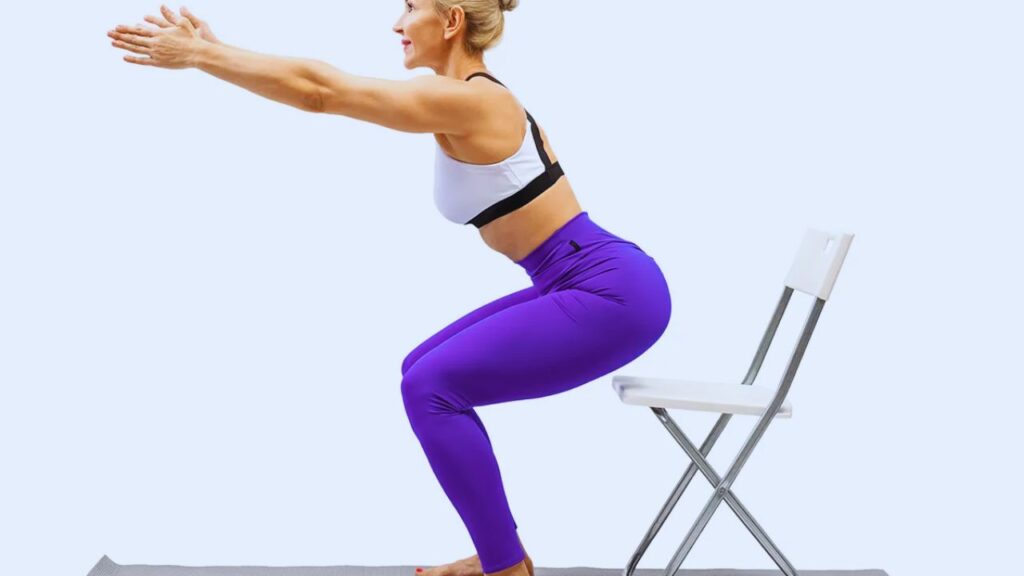
Chair-Assisted Squat Rhythm
Squats activate large muscle groups, making them essential for fat loss. Using a chair for depth control and rhythm allows reliable daily practice without joint irritation. Controlled repetitions raise metabolism while reinforcing proper movement patterns.
This method builds muscular endurance and encourages fat use by keeping muscles under steady tension. Over time, the legs become powerful metabolic drivers that support lasting fat reduction.
How to Do It
- Stand directly in front of a chair
- Lower hips toward the seat with control
- Lightly tap the chair, then stand
- Breathe steadily throughout
Standing Cross-Body Reach Pattern
Rotational movements engage the core, shoulders, and hips together. These cross-body reaches raise heart rate while shaping the waist, a combination often missing from low-impact routines. Standing adds a balance challenge without stressing the joints.
Daily rotational work improves movement efficiency and increases overall energy use. This makes it a highly effective fat-loss tool without the recovery cost of explosive training.
How to Do It
- Stand with feet shoulder-width apart
- Reach one arm diagonally across the body
- Rotate the torso with control
- Alternate sides smoothly
Loaded Carry March
Marching while carrying weight blends strength, balance, and endurance into one low-impact routine. This movement elevates heart rate quickly while demanding full-body tension. Unlike high-intensity workouts, the effort stays manageable and repeatable.

Practiced daily, loaded carries reinforce posture and bracing while increasing calorie burn through sustained muscle involvement. Even short sessions deliver a strong metabolic effect without joint stress.

How to Do It
- Hold light weights at sides or chest
- March slowly with controlled steps
- Keep ribs down and posture tall
- Stop before form breaks down
