
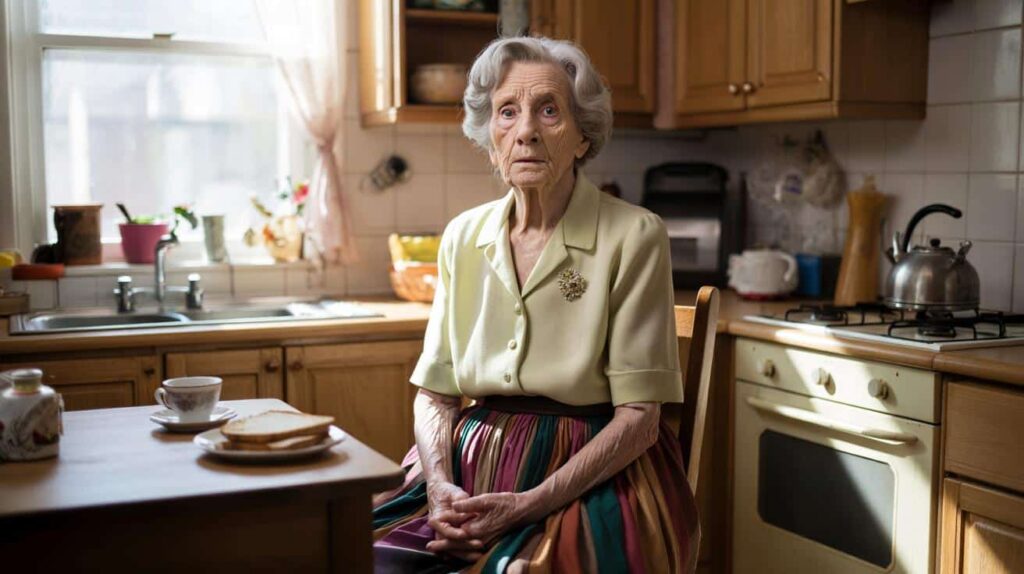
At the kitchen table sits a woman with bright eyes and a back as straight as a schoolmistress. Her name is Margaret, she is 100 years old, and she has said no to every care home brochure that has ever crossed this doorstep. Her hands tremble a little as she butters her toast, yet the gesture is precise, deliberate, almost defiant. She eats in silence, savouring each bite like a private victory. On the fridge, a faded photograph of her late husband watches over the room.
Her daughter has tried to convince her. Neighbours too. The GP hinted, gently, that “it might be time”. Margaret listened, nodded politely, and went back to hanging out her own washing. There is one daily decision she refuses to negotiate on. One choice that, in her mind, keeps her out of a care home more than any prescription or mobility aid. And it starts long before she puts the kettle on.
The 100-year-old’s non‑negotiable decision
Every morning, before breakfast, before checking the post, before answering the phone, Margaret gets dressed properly. Not lounge wear. Not the same cardigan from yesterday. A skirt she has chosen. A blouse she has ironed. A brooch pinned just so. “You don’t wait until you feel like it,” she tells me. “You dress as if someone might knock on the door.” For her, this is not vanity. It’s a daily statement: I am still in my life, not parked at the edge of it.

She doesn’t own “house clothes”. No pyjamas at 2pm. No slippers outside the bedroom. On days when her legs ache, she sits on the bed and takes longer. On days when her fingers are stiff, she swaps buttons for zips but still insists on choosing colours that make her feel awake. Once, after a spell in hospital, nurses suggested she stay in a gown to “keep things simple”. She refused, asked for her own clothes, and waited until she could stand to pull them on. That was the morning she decided she would not die in institutional fabric.

It sounds almost trivial. Clothes. A daily outfit. A small decision in a world full of bigger, scarier ones. Yet for Margaret this ritual is a line in the sand between living independently and being looked after. She believes the day she lets other people decide what she wears, or when she gets dressed, is the day she starts to disappear from herself. A growing body of research backs her instinct: routine, self-presentation and personal agency are tightly linked to cognitive resilience and emotional stability in old age. Getting dressed is not about fashion. It’s about control.
How one daily ritual keeps her out of a care home
The detail of her ritual matters. Margaret keeps her wardrobe organised by outfits, not by type of clothing. On Sunday evenings, she sits on the edge of her bed and quietly pairs tops with skirts, socks with shoes, laying them out as if she were packing for a small trip. Each pile is a promise to her future self: tomorrow, you will get up and put this on. On mornings when she feels low, she doesn’t have to think. She just follows the path she set the night before.
There’s movement hidden in all the micro-steps. Opening drawers, bending slightly, reaching for hangers, sitting, standing, fastening, smoothing fabric. If you filmed her in time-lapse, it would look like a gentle exercise routine disguised as self-care. Her GP once remarked that her range of motion is unusually good for her age. Margaret shrugged and pointed at her wardrobe. “That’s my gym,” she chuckled. She doesn’t “do workouts”. She does buttons, scarves, and the small wiggle it takes to pull up a skirt.
From the outside, friends see an elegant old lady who “still takes pride in her appearance”. Inside, something deeper is happening. By refusing to spend the day in a dressing gown, she also refuses the identity of someone who is “not quite up yet”, permanently on standby, half in bed, half in life. She starts the day as a participant, not a patient. That psychological posture matters when conversations about care start creeping in. A person who is already living like they are in a care home—meals delivered, TV on all day, pyjamas at noon—is far easier to nudge towards one. Margaret’s clothes are a quiet counter-argument.
Turning her secret into a simple habit anyone can copy
The habit itself is brutally simple. Pick tomorrow’s clothes today. Lay them out where you can see them. Decide that you will be fully dressed by a certain time each morning, even if you have nowhere to go. Margaret sets herself 9am. On difficult days, she gives herself a 10-minute window to start with just one piece: “If I can get the blouse on, the rest will follow.” She doesn’t negotiate with herself endlessly. She has a rule, and she treats it as non‑optional.
Her method is kinder than it sounds. She allows shortcuts. Elastic waistbands. Slip-on shoes on days when her fingers misbehave. A soft cardigan instead of a stiff jacket. The crucial bit is that the choice remains hers. She suggests starting with “going-out” clothes once or twice a week if daily feels too daunting. Soyons honnêtes : personne ne fait vraiment ça tous les jours, pas même Margaret when she has a fever or a hospital appointment. The point is the direction, not perfection.

The biggest trap, she says, is waiting to “feel motivated”. Motivation rarely shows up in old age, or in long stretches of loneliness. Habit needs to come first. *You move your body, then your mind wakes up.* For someone in their 70s, 80s or caring for an older relative, copying her approach means shrinking the decision: no “shall I get dressed properly?”. Just “which of these two outfits do I pick?”. Small choices are easier to win.
Margaret is blunt in the way only someone who has watched a century go by can be.
“The day you stop getting ready for the day,” she tells me, “the day starts getting ready to carry on without you.”
Behind the harshness sits something soft: a desire not to be left out of her own story. Her wardrobe is not expensive, but it is curated around how she wants to feel. Energetic colours for days she expects visits. Warmer fabrics for days when the weather and her joints gang up on her. One outfit she calls her “argument skirt” for appointments where she knows she’ll need to push back. To anchor it all, she keeps a tiny mental checklist:
- Am I wearing something I chose, not something that was just “handy”?
- Have I moved my body at least as much as getting fully dressed requires?
- Do I feel like myself when I catch my reflection?
What her refusal says about ageing, dignity and the rest of us
Watching her move through her small house, you realise this is about far more than staying out of a care home. It’s about refusing the slow erosion of identity that can begin long before any formal admission paperwork is signed. Her routine is a daily reminder that ageing is not only a medical journey; it’s also a negotiation with your own reflection. On a bad morning, she might not manage the brooch. On a truly rough one, she may swap a skirt for soft trousers. She still calls it “getting ready for the day”, not “just putting something on”.
On a wider scale, her story nudges awkward questions about how we treat older people. When families push for care homes, it’s often out of love, fear, or plain exhaustion. When the system encourages it, it’s often for safety and cost. In that pressure, small acts of choice—like what to wear and when—can look insignificant. Yet those are often the last things a person can control. On a human level, losing them can feel like disappearing by degrees. Care isn’t just about safety rails and medication rounds. It’s also about leaving room for small, stubborn rituals that say, quietly but clearly: I am still me.

Margaret’s daily decision is specific to her, yet it translates surprisingly well beyond old age. The worker on sick leave who stops putting on proper clothes. The new parent who forgets what “getting ready” even means. The retiree who drifts into days that all look the same. We all have versions of this choice: stay in the symbolic pyjamas, or step into something that tells your brain “the day has started”. On a collective level, that’s how communities stay alive too—by treating their elders as people who still have mornings worth getting dressed for.

| Point clé | Détail | Intérêt pour le lecteur |
|---|---|---|
| La décision non négociable | Se préparer et s’habiller chaque matin avec des vêtements choisis | Donne une habitude simple à copier pour garder le contrôle sur son quotidien |
| Le rituel comme mouvement caché | Chaque geste pour s’habiller devient un exercice doux et régulier | Propose une façon réaliste de rester actif sans “faire du sport” |
| L’impact sur l’identité | Le fait de s’habiller façon “sortie” maintient la sensation d’être acteur de sa vie | Aide à réfléchir à sa propre façon de vieillir et à soutenir ses proches autrement |
FAQ :
- What is the daily decision this 100-year-old refuses to compromise on?She insists on getting fully dressed every morning in clothes she has deliberately chosen, as if she were going out, even when she has no plans.
- How does getting dressed help her avoid a care home?It maintains her physical mobility, supports her mental sharpness, and reinforces a strong sense of independence that shapes how others perceive her abilities.
- Can this habit really make a difference for someone younger?Yes. A consistent “get ready for the day” ritual can stabilise mood, mark clear boundaries between rest and activity, and stop days from blurring into each other.
- What if someone has limited mobility or chronic pain?Adapting the ritual with easier fastenings, seated dressing, or fewer steps still preserves the key element: making and following a personal choice about clothing.
- How can families encourage this without being controlling?Offer options instead of orders, help prepare outfits in advance, and respect the person’s taste, even if it seems impractical or old-fashioned.
