
By late afternoon, the sky had already turned that dense, colorless gray that makes streetlights flicker on a little too early. On the radio, a calm voice repeated the same warning: heavy snow expected overnight, avoid non‑essential travel. At the next red light, a delivery van idled beside a small hatchback, both drivers staring ahead, hands tight on the steering wheel.
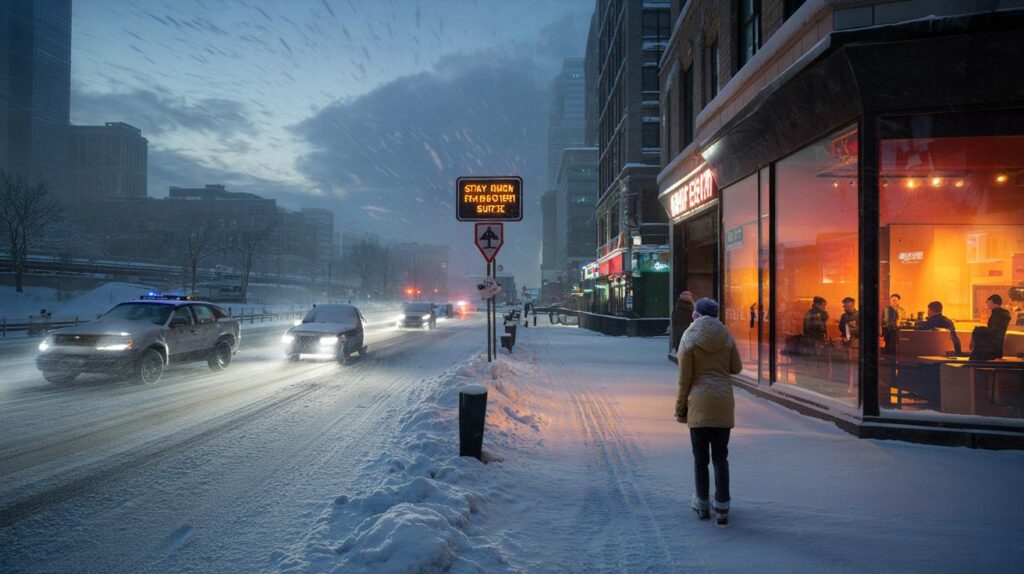
Inside cafes and offices, people refreshed weather apps between emails, half‑listening as managers insisted that “tomorrow is business as usual.” A grocery cashier taped a handwritten sign near the entrance: “Storm coming — drive safe.”
Outside, the temperature dropped one quiet degree at a time.
The city felt like it was holding its breath.
When the storm hits and the schedule won’t budge
By early evening, the conflict was clear: local authorities were asking drivers to stay home, while companies were emailing staff with the exact opposite message. The snow warnings grew more urgent with each update, thick bands of blue and purple sliding across radar maps on TV. On social media, the hashtags turned from jokes about “snow day vibes” to photos of first flakes gathering on windshields and emptying parking lots.
Everybody knew the storm was coming.
Nobody agreed on what to do with tomorrow.
On the outskirts of town, Jordan, a 34‑year‑old nurse, sat at the kitchen table scrolling through her messages. Her hospital had sent a firm reminder: shifts were “critical” and attendance was expected. At the same time, the county emergency alert pinged her phone, advising residents to stay off the roads after 10 p.m. due to “potentially life‑threatening conditions.”
Her husband laid out the kids’ winter boots by the door, already thinking they’d be home from school. Jordan opened a map and traced the 40‑minute drive she usually did half‑asleep at dawn, now imagining it in whiteout conditions, headlights swallowed by swirling snow.
This tug-of-war between safety warnings and business pressure is not new, but storms like this one expose it in high definition. Local officials are judged on how well they protect people, companies on how well they keep operating. Those priorities slam into each other on icy highways, at bus stops, in drive-thru lanes still serving coffee at 6 a.m.
Let’s be honest: nobody really wants to admit they’re choosing revenue over risk, or job security over common sense.
So the decision gets pushed quietly onto individual drivers, one slippery commute at a time.
How to navigate mixed messages without losing your cool
When the forecast turns from “wintry mix” to “dangerous conditions,” the first move is simple: map out your real, non‑negotiable needs. Not the ones your boss calls “urgent,” but the ones where staying home would seriously harm someone. Healthcare shifts. Emergency repairs. Critical care visits.
Then list everything else. Meetings that could be on video. Deliveries that could be rescheduled. Errands that are just habit dressed up as obligation.
Once you see that on paper, the storm day looks different. You stop asking, “Am I being dramatic?” and start asking, “What truly can’t wait until the roads are clear?”
There’s also the quiet guilt that creeps in when you think about staying home. You picture co‑workers braving the roads. You hear that one colleague who always says they “made it in just fine,” as if survival equals good judgment.
We’ve all been there, that moment when you’re staring out at sideways snow and still wondering if you’re overreacting.
That feeling is exactly what slippery roads feed on: hesitation, rushing, fear of looking weak. Being cautious doesn’t mean you’re fragile. It means you’re calculating the risk with both eyes open, not pretending it’s July because your calendar says “busy week.”
There’s a plain truth underneath every snowstorm standoff: **no meeting is worth a spinout on black ice**.
“Storm days reveal who really means it when they say ‘our people come first,’” said a regional safety officer who asked not to be named to avoid clashing with local employers. “You can’t praise your teams on Monday and pressure them onto dangerous roads on Tuesday. That’s not culture, that’s branding.”
- Check multiple sources: local forecasts, traffic cams, and official alerts, not just one app.
- Ask your employer clear questions: “If roads are closed, will remote work or delay be supported?”
- Plan fallback options: carpool with someone nearby, swap shifts, or move non‑critical tasks online.
- Set a personal cut‑off: a time or condition when you simply won’t drive, no matter the pressure.
- Communicate early: tell clients, colleagues, or family your plan before the storm peaks.
*Those small decisions, made a few hours before the snow thickens, often decide whether tomorrow is a close call or just another story you tell.*
After the snow: what these nights quietly expose
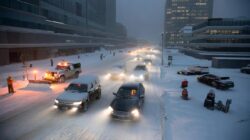
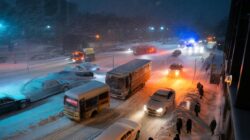
When the storm finally lands, everything slows in its own strange way. Streets empty, yet emergency lights flash more often. Some offices stay lit, parking lots a patchwork of half‑filled spaces and abandoned cars crusted in white. The gap between public safety advice and business reality becomes freshly visible in every tire track on an unplowed road.
These nights are uncomfortable because they leave us with questions long after the snow melts. Who actually had the choice to stay home? Who didn’t dare ask? Who decided that “normal operations” mattered more than nervous breaths behind steering wheels and the sudden silence when wipers can’t keep up?
*Storms like this don’t just test our infrastructure, they test what we really value when plans collide with risk.*
 Goodbye kitchen cabinets: the cheaper new trend that won’t warp, swell, or go mouldy over time
The next time the sky turns that heavy gray and authorities say stay put while your inbox says get moving, the real story might be less about the weather and more about whose judgment you trust enough to follow.

| Key point | Detail | Value for the reader |
|---|---|---|
| Assess real urgency | Sort truly essential trips from routine obligations before the storm hits | Helps you decide calmly instead of under pressure |
| Challenge “business as usual” | Ask employers about remote options, delays, or safety policies | Reduces unnecessary risk while protecting your job |
| Prepare personal limits | Set clear conditions under which you won’t drive | Gives you a backbone when messages are mixed |
FAQ:
- Question 1Should I go to work if authorities say stay off the roads but my boss says come in?
- Question 2What’s the safest way to drive if I absolutely have to be on the road?
- Question 3Can my employer penalize me for staying home during a severe weather alert?
- Question 4How can small businesses balance staying open with keeping staff safe?
- Question 5What should I prepare at home before a major snowstorm hits overnight?
