Reaching your mid-60s is a stage of life where staying active and capable matters more than ever. The goal isn’t perfection, but maintaining the kind of strength and mobility that lets you move through daily life with ease and confidence. The challenge is knowing where you stand physically. Fortunately, there’s a simple way to check your fitness level without leaving home. Right in your kitchen, a few well-chosen chair exercises can give you a clear picture of how your body is really doing.
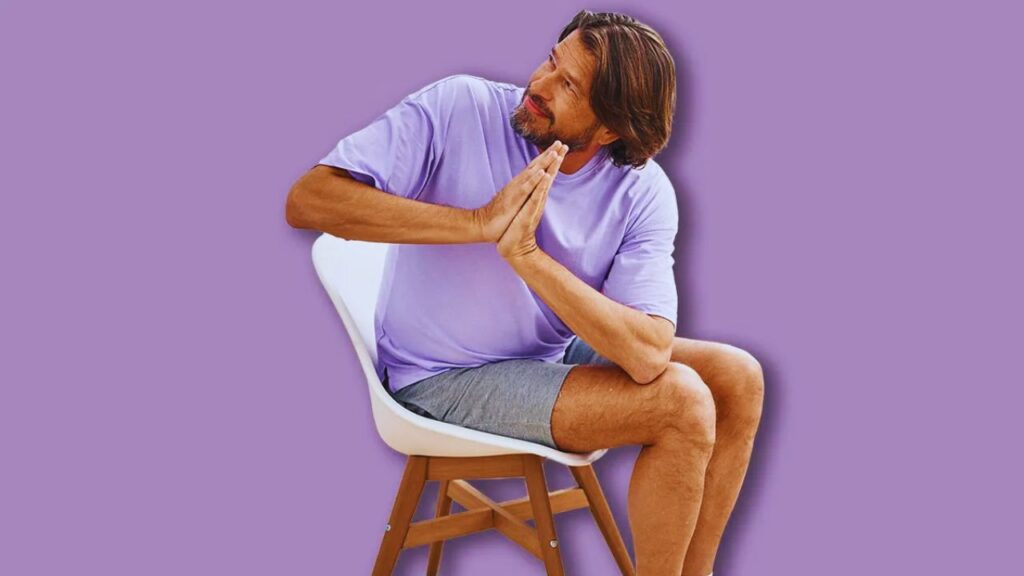
These four chair-based movements offer an easy self-assessment. According to Rhode Island–based certified fitness trainer Denise Chakoian, owner of Core Cycle and Fitness LaGree, being able to perform these exercises well at age 65 suggests a level of fitness that often surpasses that of many people in their 50s.
Why Chair-Based Exercises Work So Well
Chair exercises are a practical way to measure functional strength, flexibility, balance, and endurance. Together, these elements paint a reliable picture of overall physical health and everyday function. Because a chair provides built-in support, these movements feel safer and more approachable, especially for older adults.

As Chakoian explains, chair exercises reduce the risk of falls by allowing people to focus on proper movement rather than worrying about balance. They also make it easier to build muscle safely and improve mobility without needing to get down on the floor or stand for long periods. The chair helps protect joints from overextension while still encouraging a healthy range of motion.
 Goodbye kitchen cabinets: the cheaper new trend that won’t warp, swell, or go mouldy over time
Pull up a chair and see how your body measures up.
Four Chair Exercises That Measure Fitness at 65
Chakoian notes that adults benefit most from a routine that is regular but not strenuous. Practicing simple exercises two to three times a week can lead to noticeable gains in strength, balance, and flexibility within weeks. The following chair movements are designed to test key markers of fitness that often go beyond what’s typical for someone in their 50s.

Seated Leg Lifts
This seated movement targets the quadriceps, the muscles essential for walking, climbing stairs, and controlling how you sit and stand. With age, weaker quads can increase the risk of falls, as controlled landings become harder. Seated leg lifts strengthen these muscles while placing minimal stress on the knees.
- Sit upright with your back supported by the chair.
- Keep both feet flat on the floor.
- Hold the sides of the chair for extra stability.
- Extend your left leg straight out until the knee is fully extended, keeping your toes flexed toward your shin.
- Complete 2 to 3 sets of 15 to 20 repetitions on each leg.
Seated March
The seated march challenges the core while improving coordination as you alternate lifting each knee. This movement mimics walking mechanics and encourages core engagement throughout.
- Sit with your feet hip-width apart and flat on the floor.
- Lift your left knee up toward hip height, then lower it.
- Lift your right knee to the same height, then lower.
- Maintain upright posture as you continue the marching pattern.
- March continuously for one minute, completing 2 to 3 sets.
Seated Overhead Press
This exercise develops upper-body strength while requiring core stability, all without placing strain on the lower back. It’s performed using lightweight dumbbells.

- Sit tall on a sturdy chair with feet flat and core engaged.
- Hold light dumbbells at shoulder height with palms facing forward.
- Press the weights upward until your arms are extended, without locking the elbows.
- Lower the weights slowly back to the starting position.
- Complete 2 to 3 sets of 12 to 15 repetitions.
Seated Torso Twists
Seated torso twists support spinal mobility and build rotational strength in the obliques. The movement can be made more challenging by holding a light weight or medicine ball.

- Sit upright with feet flat on the floor and your core activated.
- Place your hands behind your head or cross them over your chest.
- Slowly rotate your torso to the left while keeping your hips facing forward.
- Return to center, then rotate to the right.
- Perform 2 sets of 15 repetitions on each side.