As the body changes over time, core strength becomes the base that supports nearly every movement. It helps maintain upright posture, shields the spine from strain, improves balance, and keeps everyday actions feeling steady and controlled. When the core weakens, even simple tasks like walking, carrying bags, or standing up from a chair can start to feel awkward, stiff, or unstable.
Many people rely on static core exercises, assuming stillness equals strength. In reality, the core’s main role is to control motion, transfer force, and stabilize the spine while the arms and legs move. Training that involves coordination, tension, and movement tends to build strength that actually carries over into daily life, especially as joints need more thoughtful care.
This is where bodyweight core training stands out. It lets you manage intensity, reinforce proper alignment, and build strength without compressing the spine. These exercises also improve how the hips, shoulders, and torso work together, supporting long-term movement confidence and resilience.

The movements below challenge the core from multiple angles, teaching it to brace under motion and develop usable strength that shows up in real-world activities. Each one earns its place by demanding more than simply holding still.
 Goodbye kitchen cabinets: the cheaper new trend that won’t warp, swell, or go mouldy over time
If You Can Complete These Four Standing Exercises Without Rest After 55, Your Endurance Is Exceptional
Dead Bugs for Controlled Core Stability
Dead bugs train the core to keep the spine stable while the arms and legs move independently. This skill supports smooth walking, stair climbing, and controlled lifting. The exercise reinforces proper breathing and bracing, helping protect the lower back. It also allows easy scaling without impact or excessive strain, making it well suited after 50.
Muscles trained: Deep abdominals, rectus abdominis, hip flexors, and obliques.
How to do it:
- Lie on your back with arms reaching upward and knees bent at 90 degrees.
- Gently press your lower back into the floor and engage your core.
- Lower your right arm and left leg toward the ground while keeping your torso steady.
- Pause briefly, then return to the start.
- Alternate sides with steady breathing.
Recommended sets and reps: Complete 3 sets of 8–10 reps per side, resting 30–45 seconds between sets.
Best variations: Bent-knee dead bugs, heel-tap dead bugs, tempo-controlled dead bugs.
Form tip: If your lower back lifts off the floor, reduce the range of motion.
Hollow Holds for Full Anterior Core Tension
Hollow holds create full-body tension from shoulders to hips, teaching the core to brace as a single unit. This supports posture and spinal control while quickly revealing weak areas so intensity can be adjusted early. When performed correctly, the exercise delivers deep engagement without excessive spinal movement.
Muscles trained: Rectus abdominis, transverse abdominis, hip flexors, and shoulder stabilizers.
How to do it:
- Lie on your back with arms overhead and legs extended.
- Brace your core and press your lower back into the floor.
- Lift your arms, shoulders, and legs slightly off the ground.
- Hold the position while breathing steadily.
- Relax fully before the next repetition.
Recommended sets and reps: Perform 3–4 sets of 20–40 second holds, resting 45 seconds between sets.
Best variations: Tucked hollow hold, one-leg hollow hold, hollow body rocks.
Form tip: Focus on quality over time and stop when tension starts to fade.
Five Daily Chair Exercises That Melt Belly Fat Faster Than Cardio After 55
Bear Crawls for Total Core Coordination
Bear crawls teach the core to stabilize while the limbs move under load. This pattern improves coordination, shoulder stability, and hip control all at once. It also elevates heart rate without impact, adding a conditioning benefit. Over time, the movement builds resilient strength that transfers well to both daily tasks and recreational activity.
Muscles trained: Entire core, shoulders, glutes, and hip flexors.
How to do it:

- Start on all fours with knees hovering just above the floor.
- Brace your core and keep your back flat.
- Move the opposite arm and leg forward together.
- Continue crawling slowly while staying controlled.
- Reverse direction or rest when form begins to break down.
Recommended sets and reps: Complete 3 sets of 20–40 seconds, resting 60 seconds between sets.
Best variations: Forward-only bear crawls, backward bear crawls, lateral bear crawls.
Form tip: Picture a glass of water balanced on your back and keep it steady.
Reverse Crunches for Lower Abdominal Control
Reverse crunches focus on lower abdominal control without placing unnecessary stress on the spine. They teach the pelvis to tilt smoothly, supporting healthier movement patterns. By limiting momentum compared to traditional crunches, this exercise stays joint-friendly while still delivering strong activation.
Muscles trained: Lower abdominals, hip flexors, and obliques.
How to do it:
- Lie on your back with knees bent and feet lifted.
- Place your arms alongside your body for support.
- Brace your core and lift your hips slightly off the floor.
- Lower slowly while maintaining abdominal tension.
- Reset before the next repetition.
Recommended sets and reps: Perform 3 sets of 10–15 reps, resting 30–45 seconds between sets.
Best variations: Bent-knee reverse crunch, single-leg reverse crunch, slow-tempo reverse crunch.
Form tip: Think about lifting the hips rather than swinging the legs.
Five Classic Strength Moves That Build More Muscle Than Machines After 40
Bird Dogs for Balance and Spinal Control
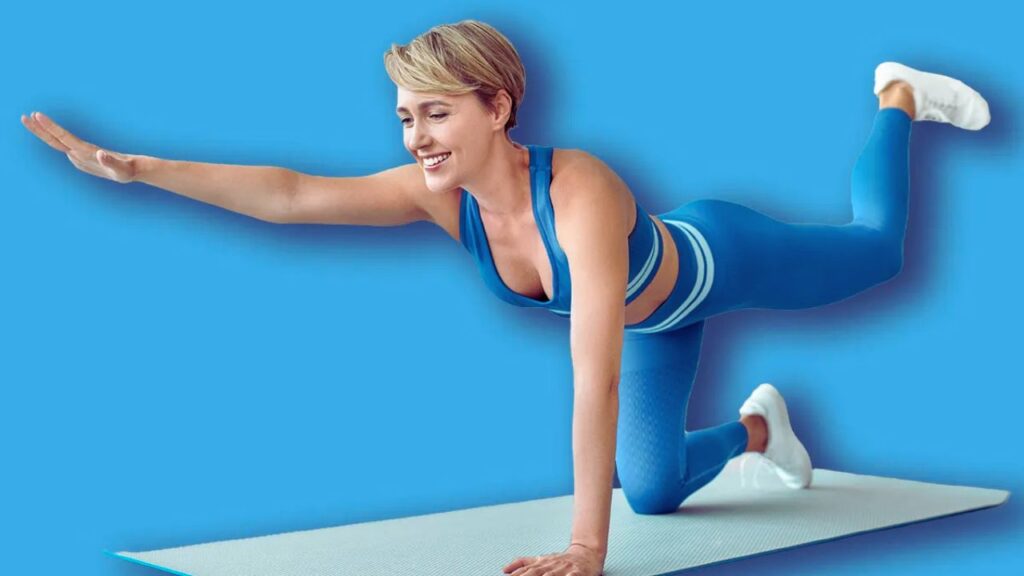
Bird dogs strengthen spinal stability through slow, controlled limb movement. This exercise enhances balance, coordination, and postural awareness while encouraging effective breathing patterns that support core engagement. With consistent practice, bird dogs help restore confidence in movement and ease unnecessary muscular tension.
Muscles trained: Deep core muscles, glutes, lower back stabilizers, and shoulders.
How to do it:
- Begin on all fours with hands positioned under shoulders.
- Brace your core and keep your spine neutral.
- Extend the opposite arm and leg with control.
- Hold briefly, then return to the starting position.
- Alternate sides while maintaining steady balance.
Recommended sets and reps: Complete 3 sets of 8–10 reps per side, resting 30 seconds between sets.
Best variations: Elevated bird dogs, pause-hold bird dogs, resistance band bird dogs.
Form tip: Move slowly enough that balance always feels controlled.

This Seven-Minute Morning Standing Routine Shrinks Belly Pooch in 30 Days After 50
Smart Core Training Principles After 50
Building a strong core comes from consistent practice, clear intention, and gradual progression. Effort still matters, but training with care matters even more as recovery needs increase. These guidelines help improve results while protecting joints and supporting sustainable progress.

- Prioritize quality over fatigue by stopping sets when form slips.
- Train frequently with short sessions spread across the week.
- Breathe intentionally to improve bracing and spinal support.
- Progress slowly by increasing time, reps, or complexity first.
- Blend movement by pairing core work with walking, lifting, and daily activity.