As you move into your mid-50s and beyond, core strength becomes important for far more than appearance. A strong core supports balance, posture, breathing, and the ability to move with ease throughout the day. It plays a key role in spinal protection, efficient force transfer between the upper and lower body, and keeping everyday movements smooth, steady, and controlled.
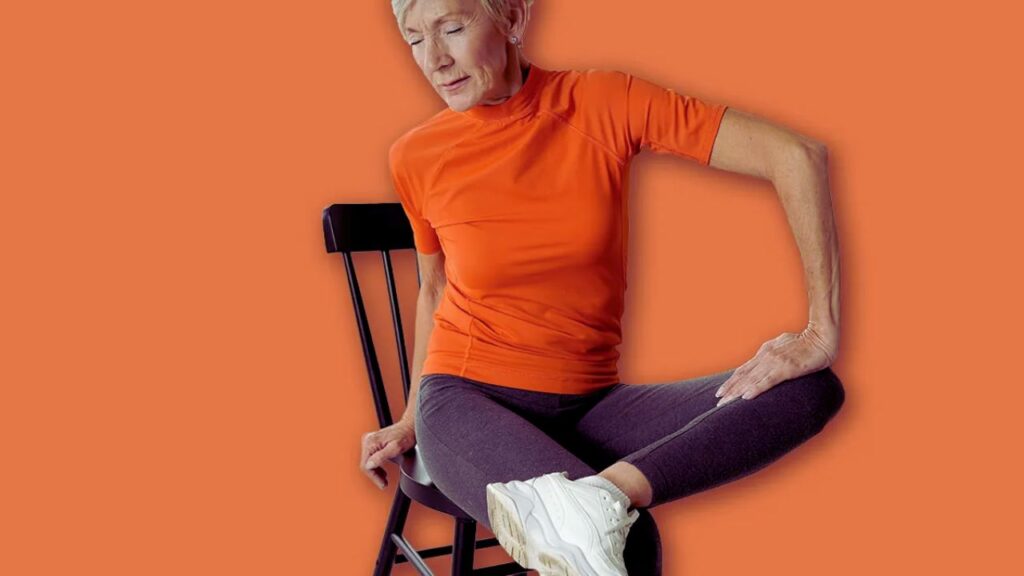
Chairs provide a surprisingly effective base for core work, especially when joint comfort, mobility limits, or hesitation about floor exercises come into play. Sitting offers stability and consistent positioning, allowing you to focus on muscle control without wrist pressure, neck strain, or awkward transitions. This stability makes it easier to train your core more often and with better focus.
Even in a seated position, your core can work through every plane of movement. Rotation, flexion, extension, and anti-movement patterns are all possible when exercises are programmed correctly. In many cases, seated drills actually increase core engagement because the legs and feet cannot compensate, forcing the trunk muscles to take on more of the workload.

The chair-based drills below target the core from multiple angles while remaining joint-friendly and highly accessible. Each movement fits easily into a daily routine and builds strength that carries over to walking, lifting, and maintaining balance. Below are the key seated exercises that make core training effective after 55.

Seated Medicine Ball Rotations
Seated medicine ball rotations develop the core through controlled rotation, an essential element for spinal health and daily movement. This drill strengthens the obliques and deep stabilizers while improving upper-lower body coordination. Sitting tall reduces momentum and forces the core to guide the motion from start to finish. Over time, improved rotational strength helps safeguard the spine during turning, reaching, and lifting tasks.
Muscles Trained: Obliques, rectus abdominis, transverse abdominis, erector spinae
How to Do It:
- Sit upright in a chair with feet planted firmly on the floor.
- Hold a medicine ball or light weight close to your chest.
- Brace your core and rotate your torso to the right with control.
- Pause briefly, then rotate through center to the left.
- Alternate sides while keeping your hips still.
Recommended Sets and Reps: 2–3 sets of 10–16 total rotations, resting 30–45 seconds between sets.
Best Variations: Light dumbbell rotations, resistance band seated rotations, bodyweight clasped-hand rotations.
Form Tip: Maintain a tall chest and keep the hips quiet throughout the movement.
Seated Knee Tucks
Seated knee tucks place direct emphasis on the lower abdominals while reinforcing control through the spine. This movement teaches the core to stabilize the pelvis as the legs move, supporting activities like walking and stair climbing. Performing the exercise seated minimizes neck strain and lower-back stress while still delivering a strong abdominal challenge. The controlled tuck-and-extend pattern also enhances hip coordination.
Muscles Trained: Lower abdominals, hip flexors, transverse abdominis, rectus abdominis
How to Do It:
- Sit near the edge of a chair and lightly grip the sides.
- Lean back slightly while keeping your chest lifted.
- Draw both knees toward your chest with control.
- Pause briefly at the top while bracing your core.
- Extend your legs back out without touching the floor.
Recommended Sets and Reps: 2–3 sets of 8–12 reps, resting 30–45 seconds between sets.
Best Variations: Alternating single-leg tucks, tempo-controlled tucks, resistance band knee tucks.
Form Tip: Exhale as the knees come in and avoid rounding the lower back.

Seated Flutter Kicks
Seated flutter kicks test your core’s ability to maintain steady tension over time. This drill targets lower abdominal endurance and hip control, areas that often decline with age. Sitting upright keeps the abs engaged as the legs move independently, reinforcing postural awareness and teaching the core to resist fatigue.
Muscles Trained: Lower abdominals, hip flexors, rectus abdominis, transverse abdominis
How to Do It:
- Sit upright in a chair with hands resting lightly on the armrests.
- Lean back slightly and brace your core.
- Extend both legs out in front of you.
- Lift one foot a few inches as the other lowers.
- Alternate legs in a controlled flutter motion.
Recommended Sets and Reps: 2–3 sets of 20–40 total kicks, resting 30–45 seconds between sets.
Best Variations: Bent-knee flutter kicks, timed holds, single-leg kick holds.
Form Tip: Keep your lower back steady and avoid leaning farther back as fatigue sets in.
Seated Pallof Hold
The seated Pallof hold builds anti-rotation strength, which is essential for protecting the spine. Instead of creating movement, this drill trains the core to resist it. Sitting removes assistance from the lower body and places the demand squarely on the trunk. Over time, this improves balance control, posture, and stability during daily activities.
Muscles Trained: Transverse abdominis, obliques, rectus abdominis, deep spinal stabilizers
How to Do It:
- Sit sideways on a chair with a resistance band anchored to your side.
- Hold the band at chest height with both hands.
- Sit tall and brace your core.
- Press the band straight out in front of your chest.
- Hold without allowing your torso to rotate.
Recommended Sets and Reps: 2–3 sets of 15–30 second holds per side, resting 30–45 seconds between sets.
Best Variations: Standing Pallof press, half-kneeling Pallof hold, single-arm Pallof press.
Form Tip: Picture your ribs stacked directly over your hips throughout the hold.
Smart Tips for Building Core Strength With Chair Exercises After 55
Chair-based core training works best when practiced as a consistent habit rather than an occasional addition. These drills may appear simple, but they deliver results when performed with intention and regularity. Paying attention to controlled breathing and precise movement makes a noticeable difference in how the core responds over time.

- Train most days: Short, frequent sessions support better activation and long-term strength.
- Use multiple planes: Combine rotation, anti-rotation, and leg-driven movements.
- Slow the tempo: Controlled reps increase time under tension.
- Maintain posture: Sit tall with ribs stacked over hips.
- Progress gradually: Increase reps, time, or resistance before adding exercises.
When practiced consistently, these chair-based drills help develop a responsive core that supports everyday movement, balance, and confidence well after 55.