Fitness after 60 is less about lifting heavier or training longer, and more about building functional strength, steady balance, and smooth, efficient movement. Research consistently shows that exercise programs built around real-life patterns—such as standing, walking, stepping, and balance-based tasks—lead to meaningful improvements in physical function for adults over 60. Compared with traditional training, these approaches enhance gait speed, balance control, mobility, and the ability to handle everyday activities with greater ease.
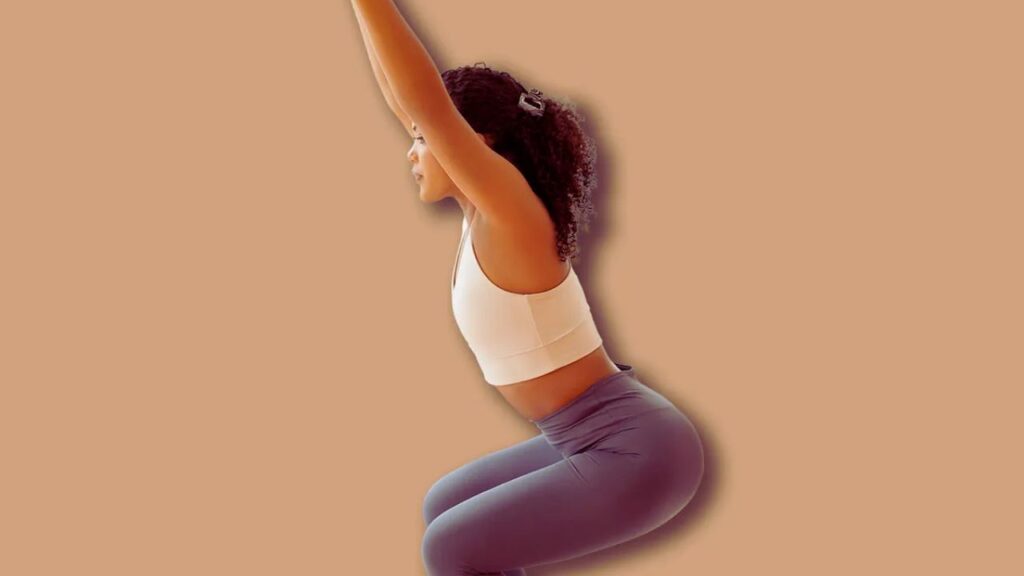
This matters because strength and stability sit underneath every daily movement, from standing up from a chair to climbing stairs. When these systems work well together, the body becomes more resilient. Standing-based exercises require muscles and the nervous system to cooperate in real time, reinforcing joint stability, balance, and endurance while placing less strain on the joints. The result is a form of fitness that feels practical, supportive, and far more transferable to daily life than isolated exercises.
The four standing movements below test more than raw strength. They reflect real-world capability. Being able to perform each one with control and confidence at 60 often signals better overall fitness, stability, and coordination than many people ten years younger. Each exercise connects the shoulders, core, hips, and legs so the body works as a single system—exactly what supports long-term mobility and independence.

Four Simple Standing Drills That Reduce Belly Overhang Better Than Ab Work After 45
Single-Leg Balance With Reach
Balance is about more than avoiding falls; it reflects how well muscle control, sensory input, and joint stability work together. Standing on one leg while reaching challenges the glutes, core, ankles, and proprioceptive systems at the same time. The body must resist tipping and stay aligned, which directly improves confidence during walking, turning, and using stairs. When performed with precision, this movement builds functional strength that goes far beyond basic balance holds.

How to Do It
- Stand upright near a chair or counter for support
- Lift one foot slightly off the floor
- Reach the opposite arm forward, then overhead
- Keep hips level and spine tall
- Hold steadily, then switch sides
Chair-to-Walk Hip Hinge for Stronger, Smoother Movement
Hip Hinge to Stand Walk
This drill teaches the body to use the hips as the main source of force rather than overloading the lower back or knees. The hinge followed by a controlled walk links the shoulders, core, and hips into one coordinated chain. Over time, this improves walking efficiency, supports better posture, and makes strength more usable for everyday tasks like carrying groceries or rising from low seating.

How to Do It
- Stand tall with feet set hip-width apart
- Push hips back while keeping the spine neutral
- Pause briefly, then drive hips forward to stand
- Take a slow, controlled step forward
- Repeat the hinge and walk pattern for several reps
Standing Half-Squat With Arm Raise for Total-Body Strength
Standing Half-Squat With Arm Raise
While squats strengthen the legs, adding an arm raise turns this into a full-body movement. The legs drive the motion while the shoulders, upper back, and core stay engaged. This coordination elevates the heart rate without impact, reinforces postural control, and creates tension through the midsection. After 60, this pattern closely mirrors the demands of lifting, reaching, and generating power in daily life.

How to Do It
- Stand with feet slightly wider than hip-width
- Lower into a shallow squat, tracking knees forward
- As you rise, lift arms to shoulder height
- Keep chest open and core engaged
- Move smoothly through each repetition
Side Step With Knee Lift to Improve Stability and Control
Side Step With Knee Lift
Lateral strength is often neglected, yet it plays a major role in staying stable when changing direction. This movement activates the hip abductors, adductors, and deep core muscles while also challenging balance. The knee lift adds a rotational stability demand, making this exercise a strong indicator of functional fitness. Confidence and control in this pattern often translate directly to safer, more fluid real-world movement.
 A polar vortex disruption is on the way, and its magnitude is almost unheard of in February
How to Do It
- Stand tall with feet together
- Step out to the side into a wide stance
- Lift the trailing knee toward waist height
- Land softly and switch directions
- Keep the core engaged throughout