Scientists are increasingly warning that the real issue is not how many hours you sleep, but when your body wants those hours – and how much your daily routine fights against that internal timing.
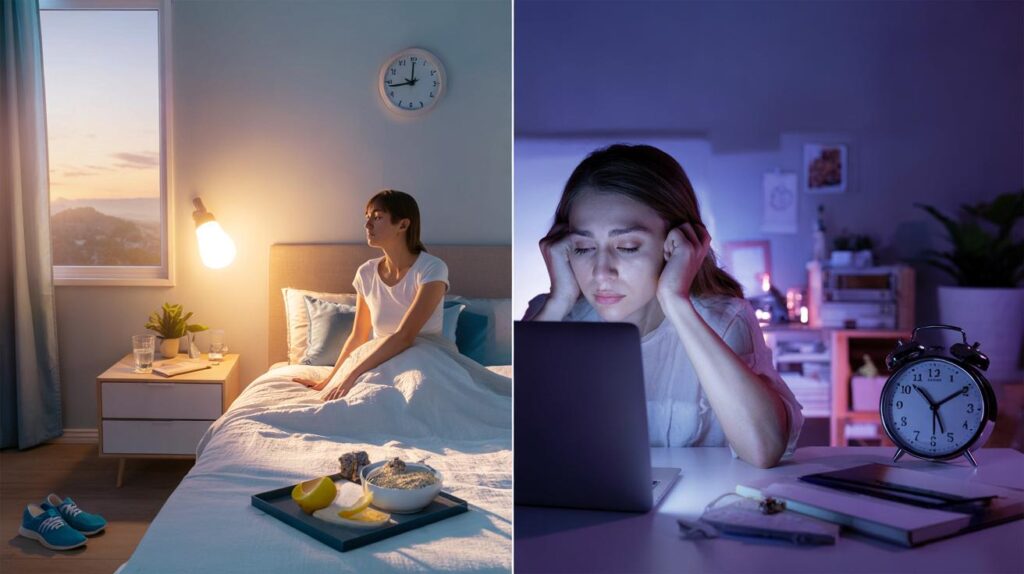
From larks to owls: what your chronotype really means
Sleep researchers use the term “chronotype” to describe your natural tendency to be more alert in the morning or in the evening.
- Larks: wake up early, feel sharp in the morning, get sleepy soon after dark
- Owls: feel sluggish early, come alive in the late afternoon and evening, struggle to sleep early
- Intermediate types: fall somewhere in between, with less extreme preferences
The new work highlighted in the Journal of the American Heart Association points at evening chronotypes – the “owls” – as the group taking on the highest health burden.

People who are naturally evening types are far more likely to live out of sync with their internal clock, and that mismatch appears to harm heart and metabolic health.

The problem is not that staying up late is immoral or lazy. The problem is that most modern societies still run on a “lark schedule”: early work starts, early school bells, early commuting.
What the study shows about health risks for night owls
According to the research, individuals with a strong evening chronotype are more prone to what scientists call “circadian misalignment”.
This happens when your biological clock says “it’s night-time” while you are still working, scrolling, snacking or commuting, or when it says “keep sleeping” but your alarm forces you up.
Circadian misalignment and cardiometabolic health
The study links this misalignment to several unhealthy patterns that cluster in owls:
- Irregular bedtimes and wake-up times during the week
- Shorter sleep duration on workdays and “catch-up” sleep at weekends
- Higher tendency to smoke or drink alcohol late in the evening
- Increased late-night calorie intake, often rich in fats and sugars
These behaviours interact with the body’s natural 24-hour rhythm, which tightly coordinates hormones, digestion, blood sugar, and blood pressure.
When lifestyle constantly clashes with the internal clock, blood sugar control, cholesterol levels and blood pressure regulation tend to worsen over time.
That cluster of changes is usually described as “cardiometabolic risk”. It feeds into conditions such as type 2 diabetes, hypertension, and heart disease.
Larks vs owls: who has the higher odds of trouble?
The research suggests that, on average, being a morning person offers a relative health advantage in modern society.
| Aspect | Larks (morning types) | Owls (evening types) |
|---|---|---|
| Alignment with work schedule | Usually good | Often poor |
| Sleep duration on workdays | Closer to recommended 7–9 hours | Often reduced by early alarms |
| Eating time | Main meals earlier in the day | Heavier intake in late evening or night |
| Cardiometabolic risk profile | Generally lower | Generally higher |
Morning types tend to fall asleep more easily at a socially acceptable hour and wake up without extreme effort. That makes it easier to keep a stable schedule, eat breakfast, and avoid heavy late-night snacking.
Evening types, pushed into a morning-shaped timetable, often collect a debt of sleep and rely on stimulants such as caffeine during the day and screens at night. This loop can go on for years.
The “social jet lag” effect
A key idea behind these findings is “social jet lag”.
Social jet lag is the gap between the time your body wants to sleep and the time society forces you to sleep.
For a classic owl, the body might feel ready to sleep at 1am and to wake naturally at 9am. If work demands a 6.30am alarm, that person lives in a constant state of jet lag, even without flying anywhere.
Weekend lie-ins partially repay the debt, but they also shift the clock later again, making Monday mornings even harder and the rhythm even more unstable.
Why night-time wakefulness hits metabolism harder
The human body handles food and stress differently depending on the hour of the day.
Late at night, digestion slows, insulin sensitivity drops, and the body expects fasting and rest. When we eat substantial meals, drink alcohol, or stay mentally wired during that window, the machinery is working against its natural setting.

Studies have shown that the same meal eaten at 10pm leads to higher blood sugar and fat levels than when eaten at 6pm. Over years, that difference contributes to weight gain, fatty liver, and poorer cholesterol numbers.
For owls, the risk often comes less from being awake at night once in a while, and more from a long-term pattern of late eating and short, irregular sleep driven by social demands.
Can owls reduce their risk without becoming larks?
Chronotype has a genetic component. Some people are simply wired to be more alert in the evening. For them, forcing a 5am routine can feel brutal and unsustainable.
Researchers suggest focusing less on copying early risers and more on shrinking the misalignment between your natural rhythm and your daily obligations.
Practical steps for evening types
Several strategies can reduce health risks without completely changing personality:
- Shift light exposure: seek bright natural light soon after waking; dim screens and strong lights 1–2 hours before bedtime
- Move food earlier: keep the last substantial meal at least 3 hours before sleep, even if bedtime is late
- Keep a stable schedule: avoid huge differences between weekday and weekend wake-up times
- Limit late stimulants: cut caffeine by mid-afternoon, and reduce intense work or gaming sessions close to bedtime
- Adjust work where possible: when jobs allow flexible hours, shift meetings and demanding tasks slightly later in the morning
None of these tactics turns an owl into a lark, but they nudge the internal and external clocks closer together, which appears protective for heart and metabolic function.
When should people worry about their sleep pattern?
Two terms often confuse readers: chronotype and insomnia. They describe different situations.
- Chronotype: your preferred timing for sleep and alertness; a stable trait across your life, though it can shift with age
- Insomnia: difficulty falling or staying asleep despite having the opportunity, often linked to stress, anxiety, or health problems
An owl who falls asleep easily at 1am and sleeps soundly until 9am on free days does not automatically have a sleep disorder. The main risk arrives when work or family commitments chop that sleep down to five or six hours for long stretches.
Signals that the schedule is becoming unhealthy include constant daytime sleepiness, reliance on high doses of caffeine, strong cravings for sugary foods, and rising blood pressure or weight despite no clear change in diet quality.
Real-life scenarios: two people, same hours, different risks
Consider two adults who both sleep seven hours a night.
The first goes to bed at 10pm and wakes at 5am, in line with their natural preference and work needs. The second prefers 1am to 8am but has to rise at 6am on weekdays, only sleeping to 9am on weekends.
On paper both are getting roughly similar weekly totals, yet the second person is repeatedly cutting short their natural sleep while shifting schedule every few days, a pattern strongly linked to cardiometabolic strain.
This kind of example helps explain why the study flags evening chronotypes as a higher-risk group. The danger does not lie purely in the clock time, but in the chronic tug-of-war between biology and routine.
How timing interacts with other health habits
Chronotype does not act alone. It interacts with diet, movement, stress, and work patterns.
An evening type who secures a flexible job, keeps late meals light, walks in the morning light, and protects seven to eight hours in bed can dramatically soften the risk outlined in the heart association journal.
By contrast, a morning person who smokes, rarely moves, and works regular night shifts can still run into serious trouble despite waking early on non-work days.
 Goodbye kitchen cabinets: the cheaper new trend that won’t warp, swell, or go mouldy over time
For readers thinking about their own routine, the useful question is less “Should I wake at 5am to be healthy?” and more “How far is my current schedule from my natural rhythm, and how can I reduce that gap while improving sleep quality and meal timing?”