France’s VINCI has agreed to buy Fletcher Construction in New Zealand for around €183 million, a move that turns a distant regional player into a central pillar of its Oceania ambitions and sends a clear signal to rivals in Australia and Asia-Pacific.
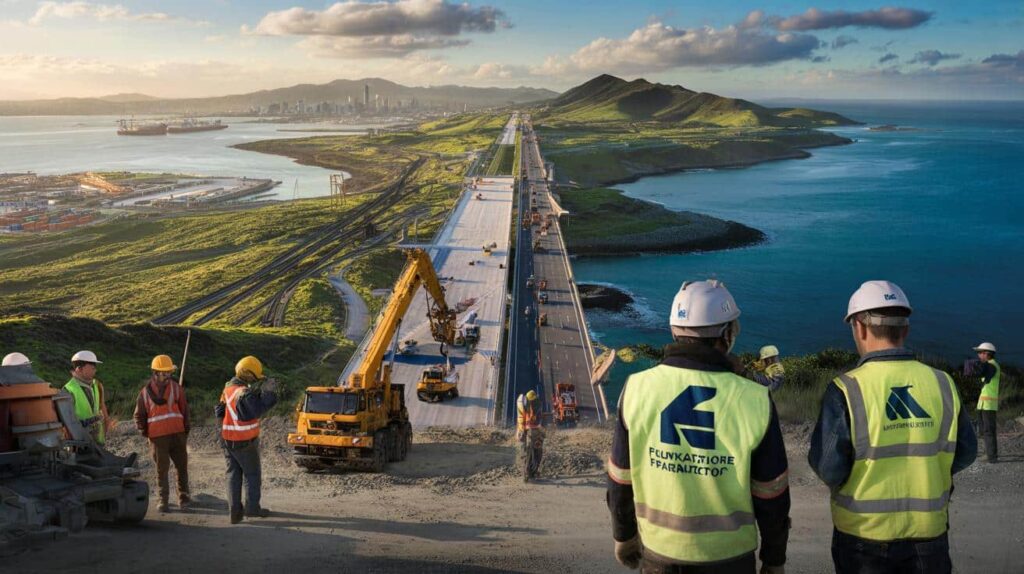
Vinci goes shopping at the end of the earth
VINCI is not just adding a few contracts to its order book. It is taking control of one of New Zealand’s best-known builders.
Fletcher Construction was founded in 1909 and has grown into a national heavyweight. The company employs roughly 2,300 people and generates close to €630 million in annual revenue in New Zealand alone.

For €183 million, VINCI buys more than a company name: it acquires local roots, relationships and technical know‑how built over a century.

The group works on a wide range of projects, from strategic highways and heavy civil works to complex buildings and large public programmes. It is also active in the South Pacific islands, where every project must deal with remote locations, fragile ecosystems, tricky maritime logistics and often harsh weather.
Fletcher is organised around specialised divisions used to long-duration projects and design–build contracts. Many of its worksites sit in dense urban areas or in regions exposed to earthquakes, intense rainfall and landslides. That experience in risk-heavy environments is a major attraction for VINCI, which has been seeking stronger capabilities in climate-resilient infrastructure.
New Zealand, a live testbed for modern infrastructure
New Zealand’s infrastructure market is buzzing. Years of underinvestment, combined with climate stress and population growth, have created a long list of upgrades and new builds.
Across the country, authorities are launching programmes to reinforce roads, adapt ports to new trade patterns, modernise rail networks and rethink water systems after a string of severe storms and floods.
VINCI was already present in the country through HEB Construction, active in roads, bridges and marine works. The Fletcher deal deepens this presence and brings real scale.
With HEB and Fletcher under the same umbrella, VINCI shifts from being “one more foreign player” to a structuring force in New Zealand’s infrastructure pipeline.
Before the acquisition, VINCI’s annual revenue in New Zealand already exceeded €900 million. Folding Fletcher into the group adds industrial depth, a stronger local brand and a broader workforce capable of tackling simultaneous large projects across both islands.
What Fletcher adds to Vinci’s Oceania toolbox
- A 115‑year history and relationships with New Zealand’s central and local governments
- 2,300 staff familiar with seismic design, complex terrain and remote Pacific islands
- Roughly €630 million in annual New Zealand revenue
- A portfolio covering heavy civil works, transport links and major public buildings
For VINCI, the price tag reflects not just current earnings, but also the pipeline of upcoming projects in transport, water and resilience upgrades across the country.
Australia: big-ticket projects across the Tasman Sea
The bet on Oceania does not stop in Wellington or Auckland. Across the Tasman Sea, VINCI is already embedded in Australia’s infrastructure boom via its subsidiary Seymour Whyte.
Seymour Whyte recently secured three major contracts worth around €604 million in total, reinforcing VINCI’s place among the region’s leading contractors.
Key Australian projects on Vinci’s radar
- Eastern Freeway Hoddle–Burke, Melbourne – An alliance project valued at about €450 million for the joint venture, aimed at boosting capacity, adding bus lanes, shared paths and noise protection. Completion is expected around 2028.
- Urban road project in Sydney – A design–build contract of roughly €154 million for Transport for New South Wales, focused on easing congestion, improving road safety and integrating active travel options.
- Lower Molonglo wastewater treatment plant, Canberra – A decade-long modernisation programme led with VINCI Construction Grands Projets for Icon Water, designed to increase capacity, improve performance and strengthen environmental resilience. The global budget remains confidential.
These Australian wins, combined with the Fletcher acquisition, knit together a regional platform stretching from major Australian cities to smaller Pacific islands.
Innovation push: from concrete to data
VINCI’s Oceania strategy is not only based on buying local champions. The group is also importing technology and R&D through its Leonard innovation platform, which focuses on construction, energy and mobility.
In Australia and New Zealand, teams are working on ways to slash the environmental footprint of construction sites, improve the energy performance of new infrastructure and use digital tools for maintenance.
Sensors embedded in bridges, tunnels and pipes can send real-time data, allowing operators to spot weaknesses before they become failures.

These tools aim to extend the lifespan of assets such as bridges, water networks and coastal defences, while cutting the cost and disruption of heavy maintenance. The pitch to governments is clear: spend more on design and digital monitoring early on to save on emergency repairs later.
A more global Vinci, with Oceania gaining weight
Globally, VINCI employs over 280,000 people in more than 120 countries. Europe, and particularly France, still dominates in headcount and revenue, but the centre of gravity is shifting.
Recent acquisitions such as Spanish-based Cobra IS and now Fletcher push the share of staff outside Europe above 30%, with Asia-Pacific and the Americas taking a bigger role in growth.
| Region | Estimated staff | Share of total | Main activities |
| Europe (including France) | ~200,000 | ~71% | Motorways, high‑speed rail, airports, energy, urban construction |
| Américas | ~50,000 | ~18% | Airports, highways, civil engineering, power networks |
| Africa – Middle East | ~16,000 | ~6% | Roads, ports, renewables, infrastructure |
| Asia-Pacific / Oceania | 15,000+ (rising) | 6%+ | Airports, highways, construction in Australia and New Zealand |
The Fletcher deal nudges Oceania further up this chart and gives VINCI a more balanced portfolio between mature European markets and faster-growing regions exposed to climate and demographic pressures.
Why Oceania matters for global builders
New Zealand and Australia may look small compared with the US or Europe, but they concentrate several trends reshaping infrastructure worldwide.
Both countries face climate shocks, from heavy rainfall to coastal erosion and bushfires. They must maintain long, sparse networks of roads, railways and power lines over difficult terrain. They also operate strict environmental rules and increasingly demand low-carbon construction methods.
For groups like VINCI, Oceania acts as a laboratory: crack resilience and low‑carbon design here, and those solutions can be exported elsewhere.
At the same time, political risk is relatively contained, currencies are stable and legal frameworks are clear. For a European group keen to expand outside its home market without jumping straight into higher-risk regions, Oceania offers a compelling mix of challenge and predictability.
What this means for local communities and workers
For New Zealand’s construction workers, the arrival of a global giant raises a mix of expectations and questions. A new owner can bring training, international career paths and investment in machines and digital tools. It can also trigger fears about centralised decision-making or pressure on margins.
On the public side, governments tend to welcome large, well-capitalised contractors for complex projects. But they also need competitive tension to keep prices in check and encourage innovation. Regulators will watch closely how VINCI manages its enlarged footprint alongside other domestic and foreign players.
Terms and scenarios: how this could play out
Two concepts sit at the heart of this story: design–build and resilience.
Design–build contracts bundle engineering and construction into a single package. Instead of the state designing a road and then tendering it to builders, one consortium handles both. This can shorten timelines and align incentives, but it also concentrates responsibility and risk.
Resilience, in infrastructure jargon, means the ability of an asset to withstand shocks and recover quickly. In practice, that might mean raising a coastal highway, reinforcing a bridge’s foundations against floods or designing a treatment plant that can keep working during extreme storms.
With Fletcher on board, VINCI can test scenario-based planning with local authorities: for instance, modelling how a once-in-100-year flood might affect a highway network in 2040, then adjusting designs and materials accordingly. Those simulations can change everything from the alignment of a road to the type of concrete or drainage system selected.
There are risks. Cost overruns on complex projects can erode the benefits of any acquisition. Cultural clashes between French management and New Zealand teams could slow integration. And a sharp downturn in public spending would hit order books on both sides of the Tasman.

Yet the potential upside is substantial: a more resilient New Zealand and Australia, a stronger Oceania hub for VINCI, and a set of climate-ready engineering practices that could be rolled out from Wellington and Sydney to Latin America and beyond.